
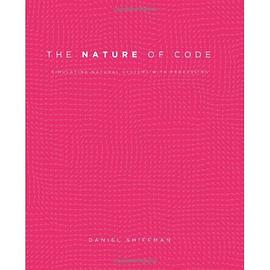

具体描述
How can we capture the unpredictable evolutionary and emergent properties of nature in software? How can understanding the mathematical principles behind our physical world help us to create digital worlds? This book focuses on a range of programming strategies and techniques behind computer simulations of natural systems, from elementary concepts in mathematics and physics to more advanced algorithms that enable sophisticated visual results. Readers will progress from building a basic physics engine to creating intelligent moving objects and complex systems, setting the foundation for further experiments in generative design. Subjects covered include forces, trigonometry, fractals, cellular automata, self-organization, and genetic algorithms. The book's examples are written in Processing, an open-source language and development environment built on top of the Java programming language. On the book's website (http://www.natureofcode.com), the examples run in the browser via Processing's JavaScript mode.
用户评价
##够硬,youtube上作者的视频很棒,简单的个体行为构成复杂难以预测的群体,联想到 《失控》
评分##p5.js
评分##这真的不是一本高中物理书吗?
评分##好多processing栗子啊!
评分##processing入门=橙+粉+蓝
评分##processing入门=橙+粉+蓝
评分##对学Processing的人很有用的一本书,英文也都用的比较通俗易懂的简单的句子,但毕竟不是母语看着有些慢,发现有中文版本的就转战中文版了。
评分##感觉把状态机加进去就更好了
评分##Processing 看这个就够了,免费的。如果运动学都记得,直接看代码就行。 56789 章开始比较有意思。
相关图书















本站所有内容均为互联网搜索引擎提供的公开搜索信息,本站不存储任何数据与内容,任何内容与数据均与本站无关,如有需要请联系相关搜索引擎包括但不限于百度,google,bing,sogou 等
© 2026 book.idnshop.cc All Rights Reserved. 静思书屋 版权所有