
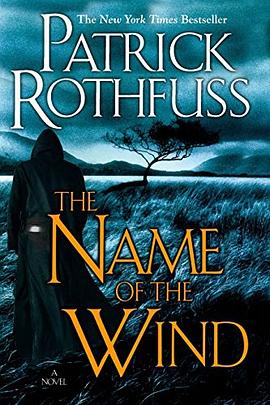

具體描述
From Publishers Weekly
Starred Review. The originality of Rothfuss's outstanding debut fantasy, the first of a trilogy, lies less in its unnamed imaginary world than in its precise execution. Kvothe ("pronounced nearly the same as 'Quothe' "), the hero and villain of a thousand tales who's presumed dead, lives as the simple proprietor of the Waystone Inn under an assumed name. Prompted by a biographer called Chronicler who realizes his true identity, Kvothe starts to tell his life story. From his upbringing as an actor in his family's traveling troupe of magicians, jugglers and jesters, the Edema Ruh, to feral child on the streets of the vast port city of Tarbean, then his education at "the University," Kvothe is driven by twin imperatives—his desire to learn the higher magic of naming and his need to discover as much as possible about the Chandrian, the demons of legend who murdered his family. As absorbing on a second reading as it is on the first, this is the type of assured, rich first novel most writers can only dream of producing. The fantasy world has a new star. (Apr.)
Copyright © Reed Business Information, a division of Reed Elsevier Inc. All rights reserved.
From Booklist
Travelers to the village where Kote runs an inn are rare, but those who've shown up lately have brought bad news. A sort of demonic spider attacks a local, and then Kote rescues a wandering scholar, bringing him to the inn to recover. The man recognizes Kote as the legendary hero Kvothe and begs him to reveal the reality behind all the legends. Most of the novel is Kvothe's autobiography, that of a young genius growing up in a troupe of elite traveling players, tutored by an old arcanist, until marauders (mere marauders?) destroyed it, after which he made his way to the great university and petitioned for admission. Rothfuss skillfully handles the change of Kvothe's voice from child to youth to student, and the voice of the mature Kvothe in retrospective interjections. Hints of further adventures are strewn about in this series opener, whose one problem lies in its naturally slow, unfortunately sometimes draggy pacing. Not exactly a page-turner, but fanciers of long, intricate plots will be pleased. Frieda Murray
Copyright © American Library Association. All rights reserved
用戶評價
##雖然節奏慢,但是寫的很好!很多押韻,很多讓人想一下然後會心一笑的地方。因後來如飢似渴的讀完中文版,而沒看完。以後再看吧。
評分##“I just want my Reshi back Q^Q ”麻痹此時簡直蘇力爆到瞭一個新的高度,讓我最後一秒違心給多瞭一顆星。理性地想想也隻是寫的棒的起點文水準而已啊。Bast太賢惠瞭哈哈哈無法吐槽。有聲書很棒。
評分##Cast a long line in order to catch a big fish.
評分##“I just want my Reshi back Q^Q ”麻痹此時簡直蘇力爆到瞭一個新的高度,讓我最後一秒違心給多瞭一顆星。理性地想想也隻是寫的棒的起點文水準而已啊。Bast太賢惠瞭哈哈哈無法吐槽。有聲書很棒。
評分##雖然節奏慢,但是寫的很好!很多押韻,很多讓人想一下然後會心一笑的地方。因後來如飢似渴的讀完中文版,而沒看完。以後再看吧。
評分##Cast a long line in order to catch a big fish.
評分##我最終在300頁的時候放下瞭它。 主人公是一個「完美」的「人」(這個世界上有完美的人存在嗎?我的迴答是:沒有),除瞭貧窮,以及擁有一個悲慘的過去。他對所有需要知道的事情都有百科全書式的知識和瞭解。他永遠不會做錯事,而且所做都是正確的;女性角色極其稀少,壞人都是紙糊的小人,他們都沒有任何維度的存在…我覺得我沒有必再進行長篇大論的咆哮。 這本書幾乎滿足瞭我對垃圾的、可怕的作品的所有厭惡——散文普通,陳詞濫調比比皆是,語言既沒有詩意也不優雅;情節或設定老套,沒有什麼真正的特色,它是愚蠢的、瑪麗蘇式的逃避現實的作品,而且它在一個已經很幼稚的故事中加入瞭性和暴力,試圖尋求成熟,這簡直令人發笑。
評分##漸入佳境,到大學這兒是高峰!作者那九年真是沒白晃啊……先記一筆。後麵有點拖遝,仍然最愛大學部分。還有檔案館,作為前圖書館員淚流滿麵。
評分##結構、敘事混亂無章。
相關圖書




本站所有内容均为互联网搜索引擎提供的公开搜索信息,本站不存储任何数据与内容,任何内容与数据均与本站无关,如有需要请联系相关搜索引擎包括但不限于百度,google,bing,sogou 等
© 2026 book.tinynews.org All Rights Reserved. 静思书屋 版权所有