


Introduction 7
Part 1: The Archetypal Big Debt Cycle 9
How I Think about Credit and Debt 9
The Template for the Archetypal Long-Term/Big Debt Cycle 13
Our Examination of the Cycle 13
The Phases of the Classic Deflationary Debt Cycle 16
-The Early Part of the Cycle 16
-The Bubble 16
-The Top 21
-The "Depression" 23
-The "Beautiful Deleveraging" 32
-"Pushing on a String" 35
-Normalization 38
Inflationary Depressions and Currency Crises 39
The Phases of the Classic Inflationary Debt Cycle 41
-The Early Part of the Cycle 41
-The Bubble 42
-The Top and Currency Defense 45
-The Depression (Often When the Currency Is Let Go) 49
-Normalization 54
The Spiral from a More Transitory Inflationary
Depression to Hyperinflation 58
War Economies 61
In Summary 64
PART 2: Detailed Case Studies
German Debt Crisis and Hyperinflation (l918-1924}
US Debt Crisis and Adiustment (1928-1937)
US Debt Crisis and Adiustment (2007-2011)
PART 3: Compendium of 48 Case Studies
Glossary of Key Economic Terms
Primarily Domestic Currency Debt Crises
Non-Domestic Currency Debt Crises
Appendix: Macroprudential Policies
· · · · · · (收起)
具体描述
"Ray Dalio's excellent study provides an innovative way of thinking about debt crises and the policy response." - Ben Bernanke
"Ray Dalio's book is must reading for anyone who aspires to prevent or manage through the next financial crisis." - Larry Summers
"A terrific piece of work from one of the world's top investors who has devoted his life to understanding markets and demonstrated that understanding by navigating the 2008 financial crisis well." - Hank Paulson
"An outstanding history of financial crises, including the devastating crisis of 2008, with a very valuable framework for understanding why the engine of the financial system occasionally breaks down, and what types of policy actions by central banks and governments are necessary to resolve systemic financial crises. This should serve as a play book for future policy makers, with practical guidance about what to do and what not to do." - Tim Geithner
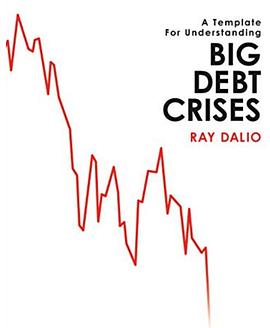
On the 10th anniversary of the 2008 financial crisis, one of the world's most successful investors, Ray Dalio, shares his unique template for how debt crises work and principles for dealing with them well. This template allowed his firm, Bridgewater Associates, to anticipate events and navigate them well while others struggled badly.
As he explained in his #1 New York Times Bestseller, Principles: Life & Work, Dalio believes that most everything happens over and over again through time so that by studying their patterns one can understand the cause-effect relationships behind them and develop principles for dealing with them well. In this 3-part research series, he does that for big debt crises and shares his template in the hopes reducing the chances of big debt crises happening and helping them be better managed in the future.
The template comes in three parts provided in three books: 1) The Archetypal Big Debt Cycle (which explains the template), 2) 3 Detailed Cases (which examines in depth the 2008 financial crisis, the 1930's Great Depression, and the 1920's inflationary depression of Germany's Weimar Republic), and 3) Compendium of 48 Cases (which is a compendium of charts and brief descriptions of the worst debt crises of the last 100 years). Whether you're an investor, a policy maker, or are simply interested, the unconventional perspective of one of the few people who navigated the crises successfully, A Template for Understanding Big Debt Crises will help you understand the economy and markets in revealing new ways.
用户评价
##part1不错,part2的三个case study, 非常非常好。part 3 估计个个都能写很长,总结的比较水。
评分通过对历史上债务危机的研究,Ray Dalio和桥水分享了理解债务危机运行的模板。书中将债务危机分为两大类:通缩型债务危机(本币计价债务)和通胀型债务危机(外币计价债务,不容易化解),而减债/去杠杆的措施Ray在之前提过很多次,分别是紧缩、债务违约/重组、QE和印钞票、财富转移再分配(这一条是新增加的),如果政策制定者能够快速反应并运用好手中工具,能够实现化解债务危机。其中对魏玛德国恶性通胀、大萧条和次贷危机进行了非常详细的解读,可以感觉出来Ray对次贷危机后美联储和财政部的应对措施极其欣赏。附录介绍的宏观审慎政策工具,本质就是指导信贷局部调整,其中一条Changing accounting rules on different assets,这就是20天前人民银行重启的“逆周期因子”吧。。
评分##Ray Dalio的现实主义贯穿始终,在解决债务危机面前,道德是次要的。
评分通过对历史上债务危机的研究,Ray Dalio和桥水分享了理解债务危机运行的模板。书中将债务危机分为两大类:通缩型债务危机(本币计价债务)和通胀型债务危机(外币计价债务,不容易化解),而减债/去杠杆的措施Ray在之前提过很多次,分别是紧缩、债务违约/重组、QE和印钞票、财富转移再分配(这一条是新增加的),如果政策制定者能够快速反应并运用好手中工具,能够实现化解债务危机。其中对魏玛德国恶性通胀、大萧条和次贷危机进行了非常详细的解读,可以感觉出来Ray对次贷危机后美联储和财政部的应对措施极其欣赏。附录介绍的宏观审慎政策工具,本质就是指导信贷局部调整,其中一条Changing accounting rules on different assets,这就是20天前人民银行重启的“逆周期因子”吧。。
评分##终于读完了。精华在于第一部分最后一节和第二部分的三个案例。其实应该反思的是战争和债务危机的关系。
评分##只有第一章细细看过,后面第二章和第三章的例子就没怎么细看了。结合刚刚看过的《第二次启蒙》还挺有贯通感:总的来说,大概所有的cycles都是因人类自己的短视而导致的,而人的短视基本上还是因为人类的短命(想象一下,如果我能活一千年,那我对于用未来二十年的痛苦来换取未来两百年的幸福会怎么想)。在这个基础上,所有的机制都有自己的矛盾和缺陷。而在一种无奈的囚徒困境下,个人只能看自己这短暂的一生恰好是在一个cycle的上升繁荣期还是下降衰退期,而能够靠自己能力改变的真的不多。
评分##结合现实看,更为有趣。
评分##囫囵吞枣的第一遍
评分##历经两年多终于读完,是一本crisis的辞典,工具书。1)危机并不是由单一因素引发,而是有结构性的问题。所以“下一个危机不定是什么东西引发的”并不在理。及时诱因有一个,但是根本上还是结构性的。2)学习到了cycle的back-end logic,在介绍部分 3)管理者manage危机的好与坏很大程度决定危机的破坏性 4) 泡沫破裂往往始于rate raise 5)泡沫破裂不一定有准确原因,只要购买之力枯竭即会破裂 6) deleveraging初期容易低估downturn的持续性,造成小规模的rally 7)危机的政治后果可能比经济后果还大,大很多 8)depression里市场会时常随着政策动向而报复性反弹,因为大家会exaggerate相对较小的事情
相关图书










本站所有内容均为互联网搜索引擎提供的公开搜索信息,本站不存储任何数据与内容,任何内容与数据均与本站无关,如有需要请联系相关搜索引擎包括但不限于百度,google,bing,sogou 等
© 2026 book.idnshop.cc All Rights Reserved. 静思书屋 版权所有