


Introduction 7
Part 1: The Archetypal Big Debt Cycle 9
How I Think about Credit and Debt 9
The Template for the Archetypal Long-Term/Big Debt Cycle 13
Our Examination of the Cycle 13
The Phases of the Classic Deflationary Debt Cycle 16
-The Early Part of the Cycle 16
-The Bubble 16
-The Top 21
-The "Depression" 23
-The "Beautiful Deleveraging" 32
-"Pushing on a String" 35
-Normalization 38
Inflationary Depressions and Currency Crises 39
The Phases of the Classic Inflationary Debt Cycle 41
-The Early Part of the Cycle 41
-The Bubble 42
-The Top and Currency Defense 45
-The Depression (Often When the Currency Is Let Go) 49
-Normalization 54
The Spiral from a More Transitory Inflationary
Depression to Hyperinflation 58
War Economies 61
In Summary 64
PART 2: Detailed Case Studies
German Debt Crisis and Hyperinflation (l918-1924}
US Debt Crisis and Adiustment (1928-1937)
US Debt Crisis and Adiustment (2007-2011)
PART 3: Compendium of 48 Case Studies
Glossary of Key Economic Terms
Primarily Domestic Currency Debt Crises
Non-Domestic Currency Debt Crises
Appendix: Macroprudential Policies
· · · · · · (收起)
具體描述
"Ray Dalio's excellent study provides an innovative way of thinking about debt crises and the policy response." - Ben Bernanke
"Ray Dalio's book is must reading for anyone who aspires to prevent or manage through the next financial crisis." - Larry Summers
"A terrific piece of work from one of the world's top investors who has devoted his life to understanding markets and demonstrated that understanding by navigating the 2008 financial crisis well." - Hank Paulson
"An outstanding history of financial crises, including the devastating crisis of 2008, with a very valuable framework for understanding why the engine of the financial system occasionally breaks down, and what types of policy actions by central banks and governments are necessary to resolve systemic financial crises. This should serve as a play book for future policy makers, with practical guidance about what to do and what not to do." - Tim Geithner
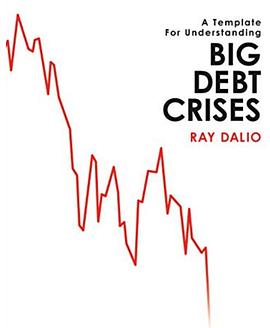
On the 10th anniversary of the 2008 financial crisis, one of the world's most successful investors, Ray Dalio, shares his unique template for how debt crises work and principles for dealing with them well. This template allowed his firm, Bridgewater Associates, to anticipate events and navigate them well while others struggled badly.
As he explained in his #1 New York Times Bestseller, Principles: Life & Work, Dalio believes that most everything happens over and over again through time so that by studying their patterns one can understand the cause-effect relationships behind them and develop principles for dealing with them well. In this 3-part research series, he does that for big debt crises and shares his template in the hopes reducing the chances of big debt crises happening and helping them be better managed in the future.
The template comes in three parts provided in three books: 1) The Archetypal Big Debt Cycle (which explains the template), 2) 3 Detailed Cases (which examines in depth the 2008 financial crisis, the 1930's Great Depression, and the 1920's inflationary depression of Germany's Weimar Republic), and 3) Compendium of 48 Cases (which is a compendium of charts and brief descriptions of the worst debt crises of the last 100 years). Whether you're an investor, a policy maker, or are simply interested, the unconventional perspective of one of the few people who navigated the crises successfully, A Template for Understanding Big Debt Crises will help you understand the economy and markets in revealing new ways.
用戶評價
##這是一本全景紀實書,反映瞭橋水對債務危機的研究。雖然是一傢之言,但是可以拿來跟《大而不倒》交叉看。第一部分的理論和第二部分的案例教學是精華,Ray保持瞭足夠的中立性。
評分##魏瑪共和國和29年大蕭條的例子非常清晰。學瞭這麼多年二戰史,竟然是看瞭dalio的書之後纔終於明白瞭一直不明白的事。算是一個意外的收獲。在理論方麵,dalio的模型其實沒有什麼特殊的。隻是更量化統一的說明瞭,在危機時放水時必須的,貨幣貶值是必須的。其他的道德和政治爭議,比如放水是不是便宜瞭黑心資本傢,比如說是不是要給政府或銀行一個教訓,這些爭論都要往後放。因為在當下,這些因素都隻會讓經濟每況愈下,無法迴復。但他整理的曆史也側麵說明瞭,在真實世界裏,做“正確的放水決定”是很睏難的,政策執行人常常會反復,所以一旦進入危機周期,每一次不徹底的政策帶來的部分反彈,都難掩整體的下行趨勢。
評分##華爾街黨支部書記還是很有料的 我有一說一????????????
評分##Simply the best hypothesis, and proven.
評分##終於讀完瞭。精華在於第一部分最後一節和第二部分的三個案例。其實應該反思的是戰爭和債務危機的關係。
評分##這是一本全景紀實書,反映瞭橋水對債務危機的研究。雖然是一傢之言,但是可以拿來跟《大而不倒》交叉看。第一部分的理論和第二部分的案例教學是精華,Ray保持瞭足夠的中立性。
評分通過對曆史上債務危機的研究,Ray Dalio和橋水分享瞭理解債務危機運行的模闆。書中將債務危機分為兩大類:通縮型債務危機(本幣計價債務)和通脹型債務危機(外幣計價債務,不容易化解),而減債/去杠杆的措施Ray在之前提過很多次,分彆是緊縮、債務違約/重組、QE和印鈔票、財富轉移再分配(這一條是新增加的),如果政策製定者能夠快速反應並運用好手中工具,能夠實現化解債務危機。其中對魏瑪德國惡性通脹、大蕭條和次貸危機進行瞭非常詳細的解讀,可以感覺齣來Ray對次貸危機後美聯儲和財政部的應對措施極其欣賞。附錄介紹的宏觀審慎政策工具,本質就是指導信貸局部調整,其中一條Changing accounting rules on different assets,這就是20天前人民銀行重啓的“逆周期因子”吧。。
評分通過對曆史上債務危機的研究,Ray Dalio和橋水分享瞭理解債務危機運行的模闆。書中將債務危機分為兩大類:通縮型債務危機(本幣計價債務)和通脹型債務危機(外幣計價債務,不容易化解),而減債/去杠杆的措施Ray在之前提過很多次,分彆是緊縮、債務違約/重組、QE和印鈔票、財富轉移再分配(這一條是新增加的),如果政策製定者能夠快速反應並運用好手中工具,能夠實現化解債務危機。其中對魏瑪德國惡性通脹、大蕭條和次貸危機進行瞭非常詳細的解讀,可以感覺齣來Ray對次貸危機後美聯儲和財政部的應對措施極其欣賞。附錄介紹的宏觀審慎政策工具,本質就是指導信貸局部調整,其中一條Changing accounting rules on different assets,這就是20天前人民銀行重啓的“逆周期因子”吧。。
評分##神作。洞見。
相關圖書








本站所有内容均为互联网搜索引擎提供的公开搜索信息,本站不存储任何数据与内容,任何内容与数据均与本站无关,如有需要请联系相关搜索引擎包括但不限于百度,google,bing,sogou 等
© 2026 book.tinynews.org All Rights Reserved. 静思书屋 版权所有