
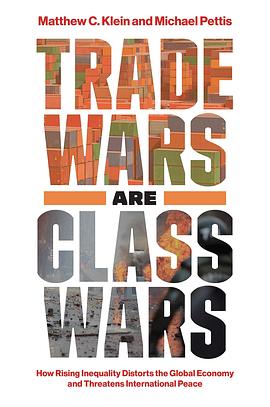

具体描述
Trade disputes are usually understood as conflicts between countries with competing national interests, but as Matthew C. Klein and Michael Pettis show, they are often the unexpected result of domestic political choices to serve the interests of the rich at the expense of workers and ordinary retirees. Klein and Pettis trace the origins of today’s trade wars to decisions made by politicians and business leaders in China, Europe, and the United States over the past thirty years. Across the world, the rich have prospered while workers can no longer afford to buy what they produce, have lost their jobs, or have been forced into higher levels of debt. In this thought‑provoking challenge to mainstream views, the authors provide a cohesive narrative that shows how the class wars of rising inequality are a threat to the global economy and international peace—and what we can do about it.
用户评价
##拉里荐书系列。几乎从国际贸易的角度讲了一遍资本主义现代史。讲中国和美国的部分稍微有点陈词滥调,德国聊的不错。前三章对贸易经济学和现代企业在贸易中角色的综述也棒极了,甚至可以作为一本放在书架上经常参考的工具书。
评分##可以通过这本书学到很多国际贸易,金融历史和现状的知识。180年前大清国与大英帝国的鸦片战争不是关于鸦片的,而是关于贸易的。鸦片战争只是从贸易矛盾升华到热战的程度,背后是因为贸易的不平衡,双方争夺的是如何成为一个顺差国。而今天的中美的贸易战本质是不同国家由于全球化造成的内部矛盾。贸易战有三方玩家,收益方是资本在全球流动过程中钱生钱的财团和银行获得巨大的利润,另外两个玩家是像中国那样低收入的贸易顺差国家和被压迫的普通人。还有受到失业的压迫以及债务的上升像美国那样的贸易逆差国家的普通人。受益者是跨国财团,受害人是中美两国的普通老百姓。川普当选后是代表美国中低层的人们利益,他们对华尔街那些财团以及全球化造成的负面影响是不满的,这些民众都是不满现状,想要改变。唯一办法是去全球化或逆全球化。
评分##"Despite these moves toward liberalization, the end of the war failed to restore trade to its pre-1929, much less pre-1913, importance. In fact, crossborder flows of goods and services relative to global output would not return to the zenith reached in the 1870s until the 1970s." Shocked me.
评分##20220527:中国过度储蓄(global saving glut)导致美国经常账户赤字增加的胡话出自伯南克。本想把这句话补加书评中,但显示书评中有被禁内容,无法更新。也不知是哪些词犯了禁,原书评是人工审核通过的,但编辑更新估计是系统自动审核,所以过不了。豆瓣审查功能就是这么差。
评分##台版
评分##未必正确,但读一下有助于理解outsiders的思路
评分##未必正确,但读一下有助于理解outsiders的思路
评分##未必正确,但读一下有助于理解outsiders的思路
评分##拉里荐书系列。几乎从国际贸易的角度讲了一遍资本主义现代史。讲中国和美国的部分稍微有点陈词滥调,德国聊的不错。前三章对贸易经济学和现代企业在贸易中角色的综述也棒极了,甚至可以作为一本放在书架上经常参考的工具书。
相关图书











本站所有内容均为互联网搜索引擎提供的公开搜索信息,本站不存储任何数据与内容,任何内容与数据均与本站无关,如有需要请联系相关搜索引擎包括但不限于百度,google,bing,sogou 等
© 2026 book.idnshop.cc All Rights Reserved. 静思书屋 版权所有