

具体描述
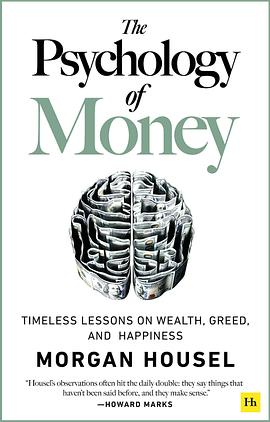
Doing well with money isn’t necessarily about what you know. It’s about how you behave. And behavior is hard to teach, even to really smart people.
Money―investing, personal finance, and business decisions―is typically taught as a math-based field, where data and formulas tell us exactly what to do. But in the real world people don’t make financial decisions on a spreadsheet. They make them at the dinner table, or in a meeting room, where personal history, your own unique view of the world, ego, pride, marketing, and odd incentives are scrambled together.
In The Psychology of Money, award-winning author Morgan Housel shares 19 short stories exploring the strange ways people think about money and teaches you how to make better sense of one of life’s most important topics.
用户评价
##虽然文笔和结构流于专栏作家体,但是许多朴素的真理不破。有关储蓄,欲望管理,和对风险的理解这几点与身边许多投资人契合度很高,也是我深以为然的。从理财角度唯一旗帜鲜明不赞同的应该是作者在低利率的大环境和自身高储蓄、较稳定现金流的情况下坚持全款购房的选择了。
评分##读完。受到金钱观的很大教育。只说我的一个takeaway lesson:作者反复强调储蓄。把握自己对财富的期望值,明晰自己对好生活的标准。
评分##Growth is driven by compounding, which always takes time. Endurance is key.
评分##学到很多。
评分##非常棒的书
评分##读完之后,知道存钱的重要性。????
评分##非常棒的书
评分##perfect
评分用拼书书(pss.plus)看完,无用废话和鬼扯例证太多,比 Naval 同期那本差远了。居然还是 Amazon #1。
相关图书










本站所有内容均为互联网搜索引擎提供的公开搜索信息,本站不存储任何数据与内容,任何内容与数据均与本站无关,如有需要请联系相关搜索引擎包括但不限于百度,google,bing,sogou 等
© 2026 book.idnshop.cc All Rights Reserved. 静思书屋 版权所有