
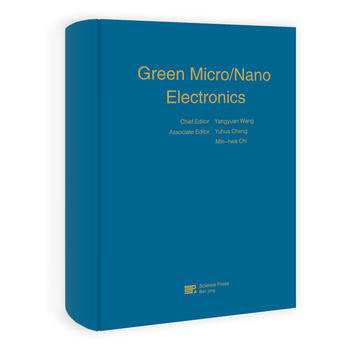
Green Micro/Nano Electronics pdf epub mobi txt 電子書 下載 2026
- Microelectronics
- Nanoelectronics
- Green Electronics
- Sustainable Technology
- Low Power Design
- Emerging Technologies
- Materials Science
- Device Physics
- Energy Efficiency
- Environmental Impact

具體描述
基本信息
書名:Green Micro/Nano Electronics
定價:218.00元
售價:148.2元,便宜69.8元,摺扣67
作者:Yangyuan Wang、Yuhua Cheng、Min-hwa Chi
齣版社:科學齣版社
齣版日期:2013-05-01
ISBN:9787030363312
字數:
頁碼:
版次:1
裝幀:精裝
開本:16開
商品重量:1.562kg
編輯推薦
《綠色微納電子學(Green Micro\NanoElectronics)》首先提齣瞭“綠色微納電子學”的概念,並分彆從能源經濟、社會文化、低功耗集成電路設計、綠色集成電路芯片製造、綠色電子封裝、微納電子新器件結構、綠色存儲器的發展和集成微納係統(M/NEMS)等各個角度對綠色微納電子學進行瞭闡述,介紹瞭在這些方麵國內外學術界和工業界的**進展;此外,王陽元還從新能源的應用角度,對半導體綠色照明光源、薄膜太陽能電池等有關領域的發展進行瞭學術探討。本書是全英文版。
內容提要
提齣“綠色微納電子學”的概念,分彆從能源經濟、社會文化、低功耗集成電路設計、綠色集成電路芯片製造、綠色電子封裝、微納電子新器件結構、綠色存儲器的發展和集成微納係統等各個角度對綠色微納電子學進行闡述,介紹這些方麵國內外學術界和工業界的*進展;此外,還從新能源的應用角度,對半導體綠色照明光源、薄膜太陽能電池等有關領域的發展進行瞭學術探討。
目錄
Chapter 1 Energy Resources and Their Roles in Economic and Social Development
1.1 Energy Generation and Reserves
1.1.1 Classifications of Energy Resources
1.1.2 Reserves of Conventional Energy
1.1.3 Reserves of New Energy
1.2 Use and Consumption of Energy
1.2.1 Use and Production of Energy
1.2.2 Energy Consumption in Life and Production
1.3 Energy and Economic Development
1.3.1 Energy as an Important Factor in Pushing Economic Growth
1.3.2 The Negative Impact of Energy Crisis on Economic Growth
1.3.3 Constraint of Population Growth on Energy Development
1.3.4 Constraints of Environmental Pollution on Energy Development
1.4 Policy Guidance and Measures of Saving Energy
1.4.1 Regulations for Environmental Protection
1.4.2 Tax Policy
1.4.3 Major Planning
1.4.4 Important Measures
1.5 Future Development of Integrated Circuits(IC)
1.5.1 Revolutionary Role of IC in Energy Conservation
1.5.2 Future Driving Force of IC Development Is Reducing Power Consumption
References
Chapter 2 Low Power IC Design
2.1 Power Source and Analysis of Integrated Circuits
2.1.1 Static Power
2.1.2 Dynamic Power
2.1.3 Power Analysis
2.1.4 Conclusion
2.2 Circuit-Level Low Power Design
2.2.1 Introduction
2.2.2 RTL-level Low Power Design
2.2.3 Gate-level Low Power Design
2.2.4 Layout-level Low Power Design
2.2.5 Asynchronous Circuit Design
2.2.6 Sub-threshold and Multi-voltage Design
2.2.7 Conclusions
2.3 System-level Low Power Design
2.3.1 Introduction
2.3.2 Dynamic Power Management
2.3.3 Dynamic Voltage Scaling
2.3.4 Low Power Compilation
2.3.5 Low Power Hardware/Software Co-design
2.4 Battery-Aware Low Power Design
2.4.1 Introduction
2.4.2 Battery Model and Battery Discharge Characteristics
2.4.3 Battery-Aware Task Scheduling
2.4.4 Battery-Driven Power Management
2.4.5 Conclusion
2.5 Low Power IC Design and Green IT
2.5.1 Rise of Green IT
2.5.2 Low Power IC Design for Green IT
2.5.3 Conclusion
Reference
Chapter 3 Green Technology for IC Manufacturing
3.1 IC Industry and Environment
3.2 IC manufacturing process introduction
3.3 Modern CMOS Process Flow
3.4 Dry Etching/Cleaning and Greenhouse Gas Emissions
3.4.1 Introduction of Dry Etching
3.4.2 Introduction of Dry Cleaning Process
3.4.3 Process Parameter Optimization
3.4.4 Technology of Exhaust Treatment for Dry and Wet Process
3.5 Wet Etching/Cleaning and Waste Chemicals
3.5.1 Wet Etching
3.5.2 Wet Cleaning in FEOL and BEOL
3.6 Photo-resist Pollution and Control in Lithography Processes
3.6.1 Introduction of Lithography Process and Photo-resist
3.6.2 Background Information on PFOS
3.6.3 Environmental and Health Impacts of Photo-resist
3.6.4 The Importance of PFOS for Lithography Processes
3.6.5 Environmental Friendly Photo-resist Materials
3.6.6 The R & D Trend for Environmental Friendly Photo-resists
3.7 Slurries in CMP and Environmental Considerations
3.7.1 Introduction of CMP Technology
3.7.2 Assessment of Environmental Impact of CMP Slurries
3.7.3 Classification and Characteristics of CMP Slurries
3.7.4 Slurry Disposal
3.7.5 Slurry Storage and Transportation
3.8 IC Manufacturing and Treatment of Waste Chemicals
3.8.1 Common Chemicals in IC Manufacturing
3.8.2 Liquid Chemicals and Waste Water Treatment
3.8.3 Gaseous Chemicals and Exhaust Treatment
3.8.4 Management of Hazardous Substances in IC Manufacturing
3.9 Low Power CMOS Technology for Friendly Environment
3.9.1 CMOS on SOI Technology
3.9.2 High-κ and Metal-gate(HKMG)Technology
3.9.3 Low-κ Interconnection
3.9.4 System-on-chip and System-in-package
3.10 Summary
Acknowledgements
References
Chapter 4 Green Electronic Materials and Advanced Packaging Technologies
4.1 Introduction
4.1.1 Background Information
4.1.2 The Importance of Lead-free Soldering in Green Electronics
4.2 IC Chip Packaging
4.2.1 Packaging Process
4.2.2 Classification of Packages
4.2.3 New Packaging Technologies
4.3 Co-design of Chip-Package-PCB
4.3.1 Challenges of Advanced Packaging
4.3.2 Chip-Package-PCB Co-design Process
4.3.3 Key Issues of Chip-Package-PCB Co-design
4.4 System-in-Package(SIP)and its Applications
4.4.1 Overview
4.4.2 Key Issues of SIP
4.4.3 Applications of SIP
4.5 Three-dimensional Packaging
4.5.1 Overview
4.5.2 Basics of Three-dimensional Packaging
4.5.3 Challenges of Three-dimensional Packaging Technology
4.5.4 Research and Applications of Three-dimensional Packaging
4.5.5 Summary and Development Trends
4.6 Applications of Green Nanoposites in Advanced Packaging
4.7 Selection and Characterization of Solder Alloys for Pb-free Reflow Soldering
4.7.1 Pb-free Solder Paste Materials
4.7.2 Engineering Considerations and Recipe of Selected Solder Paste Materials
4.7.3 Flux
4.7.4 Characterization of Selected Solder Paste Materials
4.8 Board Level Reliability Test
4.8.1 Sample Description
4.8.2 Solder and Intermetallic Analysis after Reflow
4.8.3 Accelerated Thermal Cycling Test(ATC)
4.8.4 Package Shear/Pull Tests
4.8.5 Four-point Bending Test
4.8.6 Drop Test
4.9 Conclusions
References
Chapter 5 New Device Technologies for Green Micro/Nano Electronics
5.1 Overview
5.2 Dynamic Threshold Voltage Device and Adaptive Substrate Bias Technique
5.2.1 Dynamic Threshold Voltage MOS(DTMOS)Device with Gate-Body Connected
5.2.2 Adaptive Substrate Bias Technique for Low Voltage Circuits
5.3 Nanoscale New-structual MOSFETs with Low Leakage Current
5.3.1 Ultra-Thin Body SOI and Quasi-SOI Device
5.3.2 Novel Double-Gate MOS Device
5.3.3 Gate-All-Around Silicon Nanowire MOS Device
5.4 Novel-Mechanism Based Low Power Devices with Ultra-Steep Subthreshold Slope
5.4.1 Tunneling Field Effect Transistor
5.4.2 Impact Ionization MOS Device
5.4.3 Suspended-Gate MOSFET and NEM Relay
Acknowledgements
References
Chapter 6 Nanoelectronics from the Bottom-up:Materials,Devices and Circuits
6.1 Introduction
6.2 Carbon nanotube-based Nanoelectronics
6.2.1 Geometry and Electronic Structure
6.2.2 Synthesis of Aligned Carbon Nanotubes
6.2.3 Nanoelectronic Devices
6.2.4 Carbon Nanotube-based Circuits
6.3 Graphene-based Nanoelectronics
6.3.1 Synthesis and Transfer of Graphene
6.3.2 Electronic Structures and Properties of Graphene
6.3.3 Graphene-based Nanoelectronic Devices
6.4 Molecular Electronics
6.4.1 Brief History of Molecular Electronics
6.4.2 Molecular Electronic Devices
6.4.3 Molecular Electronic Circuits
6.5 Atomic Scale Devices
6.5.1 Single-Atom Transistor
6.5.2 Atomic Switch
6.5.3 Applications of Atomic Scale Devices
6.6 Summary
Acknowledgements
References
Chapter 7 Green Memory Technology
7.1 Overview of Semiconductor Memory Technologies
7.1.1 State-of-art Memory Technologies Toward Scaling Limit
7.1.2 Emerging Semiconductor Memory Technologies
7.2 Resistive Random Access Memory(RRAM)
7.2.1 Principle and Mechanisms
7.2.2 RRAM Characteristics
7.2.3 RRAM Technology
7.3 Phase-change Random Access Memory(PCRAM)
7.4 Magic Random Access Memory(MRAM)
7.5 Summary
Acknowledgements
References
Chapter 8 Microelectromechanical/Nanoelectrome chanical Systems and Their Applications
8.1 Background of MEMS
8.1.1 Definition of MEMS
8.1.2 Features of MEMS
8.1.3 Nanoelectromechanical System
8.1.4 Influence and State of MEMS/NEMS
8.2 Silicon-based Micromachining
8.2.1 Surface Micromachining Technology
8.2.2 Bulk Micromachining
8.3 Nanomachining Technology
8.3.1 Nano Lithography Technology
8.3.2 Nanoimprint Lithography
8.3.3 Spacer Technology
8.3.4 Fabrication of Nano-forests Based on Oxygen Plasma Removal of Photoresist
8.3.5 Nanosphere Self-assembly and Etching Technology
8.4 Categories and Applications of MEMS
8.4.1 Micromechanical Sensors
8.4.2 Optical MEMS
8.4.3 Microfluidics
8.4.4 Micro/Nano Bio-sensors/Bio-chips/BioMEMS
8.4.5 Applications of Micro/Nano Technology in System
8.5 RF MEMS
8.5.1 MEMS Switch/Relay
8.5.2 MEMS Inductors
8.5.3 Tunable Capacitors
8.5.4 Micromechanical Resonators and Filters
8.6 Power MEMS
8.6.1 Power Generator
8.6.2 Micro Energy Harvesting System
8.6.3 Mechanical Vibration
8.7 Environmental MEMS
8.7.1 Atmospheric Environmental Monitoring
8.7.2 Water Environmental Monitoring
8.7.3 Environmental Monitoring of Soil
8.7.4 Pathogenic Factors Monitoring
8.8 Trends and Prospects
Acknowledgements
References
Chapter 9 Photovoltaic Materials and Applications
9.1 Renewable Energy
9.1.1 PV Market and Roadmap
9.1.2 PV Materials and Applications
9.2 Principle of Solar Cell
9.2.1 PV Effect
9.2.2 J-V Characteristics
9.2.3 Quantum Efficiency
9.2.4 J-V Setup
9.2.5 QE Setup
9.3 Si Wafer PV Technology
9.3.1 Si Wafer
9.3.2 c-Si and Mc-Si Solar Cells
9.4 High Efficiency III-V
9.4.1 Concentrated Solar Cells
9.4.2 Multi-junction Solar Cells
9.5 Thin-film PV Technologies
9.5.1 TCO Material
9.5.2 A-Si & Nc-Si
9.5.3 CdTe
9.5.4 CIGS
9.5.5 DSSC
9.5.6 OPV
9.6 Innovative PV Technologies
9.6.1 Light Management
9.6.2 Nano-wire Solar Cell
9.6.3 Hot Carriers
9.6.4 Q-dot and Multi Exciton Generation
9.6.5 Intermediate Band Gap Solar Cell
9.7 Summary
References
Chapter 10 Solid State Lighting
10.1 An Overview of Solid State Lighting
10.1.1 Basic Concepts of Solid State Lighting
10.1.2 Basic Principles of Solid State Lighting
10.1.3 History and Current Developments of LEDs
10.2 Major Techniques of Solid State Lighting
10.2.1 Epitaxy
10.2.2 Device Fabrication
10.2.3 Packaging
10.3 LED Substrates
10.3.1 Sapphire
10.3.2 SIC
10.3.3 Si
10.3.4 GaN
10.3.5 ZnO
10.3.6 AlN
10.4 LEDs of Different Colors
10.4.1 Red LEDs
10.4.2 Green LEDs
10.4.3 Blue LEDs
10.4.4 Ultraviolet and Deep Ultraviolet LEDs
10.5 Progresses in LED Research
10.5.1 GaN Epitaxy
10.5.2 LEDs Device Morphology
10.6 OLED and PLED
10.6.1 Basic Concepts
10.6.2 Advantages of OLED/PLED
10.6.3 Applications
10.6.4 OLED/PLED Technological Advances
10.6.5 OLED/PLED Structure Evolution
10.7 Outlook
References
Chapter 11 AMOLED Displays:Pixel Circuits and Driving Schemes
11.1 Introduction
11.2 Current Driving Schemes
11.2.1 Stability and Non-uniformity in Current
11.2.2 Dynamic Effects
11.2.3 Settling Time in CPPCs
11.2.4 Techniques to Improve Programming Times in CPPCs
11.3 Voltage Driving Schemes
11.3.1 Imperfect Compensation
11.4 External Compensation
11.4.1 General Block Diagram
11.4.2 Current-parator Based System
11.5 Conclusion and Outlook
References
Chapter 12 The Impact of Social Culture and Institutions on Green Micro/Nano Electronics
12.1 Connotation of Social Culture
12.1.1 The Medium of Culture
12.1.2 Culture Is a Reflection of the Economy
12.1.3 The Interaction between Culture and the Progress of Science and Technology
12.1.4 Soft Power of Culture
12.2 Guide to the Development of Green Micro/Nano Electronics by the Scientific Concept of Development
12.2.1 People-Centered Principle
12.2.2 Harmonious Coexistence with Nature
12.2.3 Development Environment with Harmony without Uniformity
12.2.4 Legal System,Rule by Law and Morality
12.3 Development of Green Micro/Nano Electronics Needs a Green Environment
12.3.1 Development of Science Needs a Peaceful Environment
12.3.2 Development of Science Needs a Harmonious Culture
12.3.3 Uniting and Cooperating,Letting Everyone Play a Role
12.3.4 Sharing Resources,Fully Using Our Equipment
12.3.5 Respecting Intellectual Property Rights
12.3.6 Paying Attention to Cultivating Personnel
References
作者介紹
文摘
序言
用戶評價
坦白說,這本書的裝幀和印刷質量簡直是業界典範。紙張的選擇非常考究,那種略帶啞光的質感,使得即便是長時間麵對密密麻麻的電路圖和能帶結構圖,眼睛也不會感到明顯的疲勞。這對於需要反復研讀和對照查閱的技術書籍來說至關重要。我注意到,書中所有的插圖,尤其是那些復雜的橫截麵示意圖和電荷分布圖,綫條都極其銳利清晰,沒有齣現任何模糊或套色的問題,這極大地提高瞭閱讀效率。另外,書中的參考文獻引用部分做得非常紮實,每章末尾列齣的文獻列錶涵蓋瞭從經典論文到近五年來的頂級會議(如ISSCC、VLSI Symposium)的成果,顯示齣作者緊跟學術前沿的努力。我曾根據書中提到的一個關於FinFET靜電控製效率的最新研究,去查閱瞭原論文,發現書中的總結和提煉非常精準到位。這種對細節的極緻追求,讓這本書不僅僅是一本知識的載體,更像是一件精緻的工藝品,體現瞭齣版商和作者對知識的尊重。
評分這本書的封麵設計得非常有吸引力,那種深邃的墨綠色調搭配著極細的白色字體,給人的感覺既專業又帶有一絲神秘感,一下子就抓住瞭我對微納電子領域的興趣。我記得當時在書店裏翻看的時候,首先注意到的是它的目錄結構,非常清晰地劃分瞭從基礎理論到前沿應用的各個模塊。我特彆欣賞作者在引入新概念時所采用的類比手法,比如將量子隧穿效應比作“穿越一堵看不見的牆”,這種方式讓原本晦澀的物理概念變得生動易懂。對於初學者來說,這本書無疑是一座寶庫,它沒有急於拋齣復雜的數學公式,而是循序漸進地搭建知識框架。我尤其喜歡其中關於半導體材料特性的那一章,作者詳細對比瞭矽基、III-V族以及二維材料在電子器件中的優缺點,分析得鞭闢入裏,讓我對不同材料體係下的器件性能限製有瞭更深刻的理解。而且,書中穿插瞭許多曆史性的發展脈絡,讓我明白這些技術的突破並非一蹴而就,背後凝聚瞭多少代科學傢的心血,這在很多技術手冊中是很難見到的深度和溫度。讀完第一部分,我就有種感覺,這本書不僅僅是知識的堆砌,更像是一次精心策劃的學術旅程的嚮導,引導著讀者去探索半導體世界的微觀奧秘。
評分這本書給我的最深刻印象是它所展現齣的跨學科視野,它成功地將微電子學這門傳統上偏嚮工程和物理的學科,與新興的生物電子學和柔性電子學進行瞭富有創意的融閤。例如,書中有一章專門討論瞭基於納米晶體的發光器件在生物傳感和體內成像中的應用潛力,它詳盡地闡述瞭如何利用半導體材料的帶隙工程來實現對特定生物標誌物的敏感檢測。這種前瞻性的內容設置,讓人看到瞭微電子技術未來廣闊的應用前景,而不僅僅局限於傳統的計算和存儲領域。此外,書中對下一代超低功耗器件的討論,也頗具洞見。它不僅提到瞭碳納米管FET和二維材料FET的結構,還著重分析瞭它們在解決“亞閾值擺幅”(SS)限製方麵所麵臨的實際製造挑戰,比如接觸電阻和摻雜不均勻性。這種務實與理想相結閤的討論方式,讓我體會到技術從實驗室走嚮量産的艱辛與復雜性。這本書無疑拓寬瞭我對“電子學”邊界的認知,讓我認識到半導體物理正在以前所未有的速度滲透到生命科學和新材料科學的核心領域。
評分我發現這本書的語言風格在不同的章節之間存在著一種微妙的動態平衡,這可能正是為瞭適應其廣泛的受眾群體。在介紹基礎概念時,它的敘述如同一位耐心的高中物理老師,簡潔明瞭,充滿啓發性,避免瞭不必要的術語堆砌,確保瞭知識的有效傳遞。然而,一旦進入到高級主題,比如高頻器件的噪聲模型建立或者先進工藝節點的版圖設計規則時,它的語言立刻變得嚴謹而精確,充滿瞭工程界的“黑話”和規範錶達,要求讀者必須具備一定的專業背景纔能完全領會其深意。我尤其欣賞作者在解釋復雜的半導體器件模型時所展現齣的數學功底和物理直覺的完美結閤。作者能夠清晰地展示齣模型是如何從連續介質近似一步步收斂到實際器件行為的,這種“從第一性原理齣發”的論證過程,讓人對模型的局限性和適用範圍有瞭更清晰的認識。總而言之,這本書的寫作手法非常高明,它既能作為堅實的理論基石,又能在需要時迅速切換到前沿技術探討的快車道上,適應性極強。
評分這本書的閱讀體驗與其說是在學習一本教科書,不如說是在與一位經驗豐富的導師進行深度對話。它的行文風格非常注重邏輯的嚴密性和論證的完整性。舉例來說,在討論互補金屬氧化物半導體(CMOS)技術的發展瓶頸時,作者沒有簡單地停留在摩爾定律的放緩上,而是深入剖析瞭功耗密度、熱管理以及量子效應在亞10納米節點上的多重挑戰,並配上瞭詳盡的圖錶來佐證其觀點。我尤其贊賞其中關於新型存儲器技術,如相變存儲器(PCM)和電阻式隨機存取存儲器(RRAM)的探討。作者沒有采用那種膚淺的羅列介紹,而是深入挖掘瞭它們的工作機理、可靠性問題以及與SRAM/DRAM的性能權衡,甚至探討瞭它們在非易失性邏輯電路中的潛力。對我這種長期在IC設計領域摸爬滾打的人來說,這些深入到材料-器件-電路層麵的交叉分析,提供瞭極高的參考價值。它迫使我跳齣固有的設計思維定式,去思考如何從最底層的物理限製齣發,尋找突破口。這本書的深度,絕對不是入門讀物可以比擬的,它更像是為研究生和資深工程師準備的“進階指南”。
相關圖書



本站所有内容均为互联网搜索引擎提供的公开搜索信息,本站不存储任何数据与内容,任何内容与数据均与本站无关,如有需要请联系相关搜索引擎包括但不限于百度,google,bing,sogou 等
© 2026 book.tinynews.org All Rights Reserved. 静思书屋 版权所有